Air Filtration in Williamsburg, KS
Air filtration services in Williamsburg, KS from All Seasons Air Conditioning and Heating help homeowners improve indoor air quality and protect HVAC efficiency through whole-home and point-of-use solutions. We cover filtration options, how MERV ratings affect performance, installation choices, diagnostic testing, and before/after metrics, along with maintenance intervals and personalized strategies for allergy and asthma sufferers. We also outline recommended replacements, portable units, humidity guidance, and maintenance clubs to ensure ongoing indoor air quality improvements, reduced allergen exposure, and longer equipment life for healthier homes.
.jpeg)
Air Filtration in Williamsburg, KS
Keeping the air in your Williamsburg, KS home clean is more than comfort — it’s health and system performance. With humid summers, cold winters, seasonal tree and ragweed pollen, and periodic agricultural dust and wood smoke in the region, targeted air filtration can significantly reduce allergy and asthma triggers while protecting your HVAC equipment. This page explains whole-home and point-of-use air filtration options, how MERV ratings affect indoor air quality (IAQ) and HVAC efficiency, installation choices, diagnostic testing and before/after metrics, recommended maintenance intervals, and tailored strategies for allergy or asthma sufferers in Williamsburg.
Why professional air filtration matters in Williamsburg, KS
- Local pollen and weed seasons increase airborne allergens for months each year.
- High summer humidity encourages mold growth in poorly ventilated spaces.
- Winter heating and wood burning can elevate indoor particulates and soot.
- Dust from nearby agricultural activity can load filters and reduce system efficiency.
Proper filtration does two jobs: remove particles that trigger symptoms, and keep HVAC coils and ducts cleaner so systems run more efficiently and last longer.
Common air filtration services and problems in Williamsburg, KS
- Whole-home filter upgrades that better capture seasonal pollen and fine particles
- Installation of media filters or high-MERV in-duct solutions for homes with central HVAC
- Portable HEPA units for bedrooms or rooms with high occupant sensitivity
- Diagnostic testing to identify particle levels, filter pressure drop, and system airflow problems
- Filter sizing and compatibility checks to avoid reduced airflow or high static pressure
- Tailored plans for allergy and asthma households that combine filtration, humidity control, and targeted cleaning
Filter types and MERV ratings (what to choose and why)
- Standard fiberglass (MERV 1–4): traps large particles (dust, lint) but offers minimal allergy protection. Usually used only as a basic pre-filter.
- Pleated filters (MERV 5–12): balance particle capture and airflow; good for general dust, pollen, and pet dander.
- High-efficiency pleated (MERV 13–16): capture finer particles, including many allergens, smoke, and bacteria-sized particles. These are often recommended for homes with allergy or asthma sufferers — provided the HVAC system can handle the added resistance.
- Media filters (deep-pleat, 4–5 inch): provide high MERV performance with lower pressure drop than thin high-MERV filters, making them a strong whole-home choice for older systems.
- HEPA (portable units or standalone purifiers): remove 99.97% of particles down to 0.3 microns in the unit’s airflow. True whole-home HEPA requires specialized equipment and ductwork modifications.
Important performance note: higher MERV improves particle capture but can increase resistance to airflow. A system-specific evaluation is essential before upgrading filters to MERV 13+ to avoid reduced HVAC efficiency or short cycling.
Installation options: pros and cons
- In-duct slot-in filters (1–2 inch): simple, low-cost, best for routine filtration upgrades. Easier to replace but limited MERV capability.
- In-duct media filters (4–5 inch): deeper media, higher capacity, better capture with less airflow penalty. Ideal for whole-home upgrades where space in the air handler or return plenum allows.
- Electronic or electrostatic cleaners: reusable options that can capture fine particles; require regular cleaning and occasional servicing.
- Portable HEPA units: effective for bedroom or home office zones, especially at night for asthma sufferers. They do not replace whole-home filtration but are an important point-of-use supplement.
Diagnostic testing and before/after performance metrics
A professional filtration service includes objective testing to show measurable improvements:
- Particle counts (PM2.5 and PM10) before and after installation to quantify reductions in fine and coarse particulates.
- Filter pressure drop and static pressure readings to ensure the system’s airflow remains within manufacturer limits.
- Airflow measurements (CFM) across the system to verify no significant loss of performance after filter changes.
- Visual inspection and photographic documentation of filter and coil condition to demonstrate reduced soiling.
- Allergen and pollen spot checks when requested for sensitive households.
These metrics help select the right filter type, demonstrate performance gains, and provide a baseline for future maintenance.
Recommended replacement intervals and maintenance
- 1-inch pleated filters: check every 30 days; typical replacement 30–90 days depending on home conditions and occupant sensitivity.
- 2–4 inch pleated filters: inspect every 60–90 days; replace 3–6 months based on loading.
- Media filters (4–5 inch): generally replace or service every 6–12 months depending on particulate load.
- Portable HEPA filters: replace cartridges per manufacturer guidance, commonly every 6–12 months with higher usage for dusty seasons.
- Electronic cleaners: require cleaning of collector cells every 2–6 months and annual inspections.Regular replacement keeps pressure drop low, maintains HVAC efficiency, and preserves IAQ improvements.
Maintenance club benefits (what homeowners can expect)
Joining a scheduled maintenance program provides:
- Regular filter checks and scheduled replacements matched to your home’s needs and local seasonal variations
- Priority scheduling during high-demand seasons (spring pollen, fall heating startup)
- Routine system inspections that include coil cleaning and airflow verification to maintain efficiency
- Documented before/after performance reports for transparency and peace of mind
- Consistent maintenance that reduces emergency repairs and prolongs HVAC service life
(No pricing specifics included; programs are tailored to system type and home needs.)
Tailored recommendations for allergy and asthma sufferers in Williamsburg
- Start with source control: reduce indoor pollen and dust entry by using door mats, removing shoes, and sealing gaps around windows and doors.
- In-duct MERV 13 filtration or a high-quality media filter is often preferred for central systems that can handle the load.
- Add a portable HEPA unit in the bedroom and any high-use living areas for overnight and targeted relief.
- Keep indoor humidity between 40–50% to reduce dust mite and mold growth risks common in humid Kansas summers.
- Combine filtration with regular duct cleaning and HVAC coil maintenance to remove trapped allergens and improve system effectiveness.
- For severe sensitivities, consider a staged strategy: whole-home media filtration plus HEPA in sleeping areas and periodic particle-count testing to validate improvements.
Final considerations
Upgrading or optimizing air filtration in Williamsburg, KS homes is a practical investment in health and equipment longevity. The right combination of whole-home filtration, point-of-use HEPA, diagnostic testing, and scheduled maintenance can markedly reduce seasonal allergens, improve sleep and respiratory health, and keep your HVAC system operating efficiently through humid summers and cold winters.
Customer Testimonials
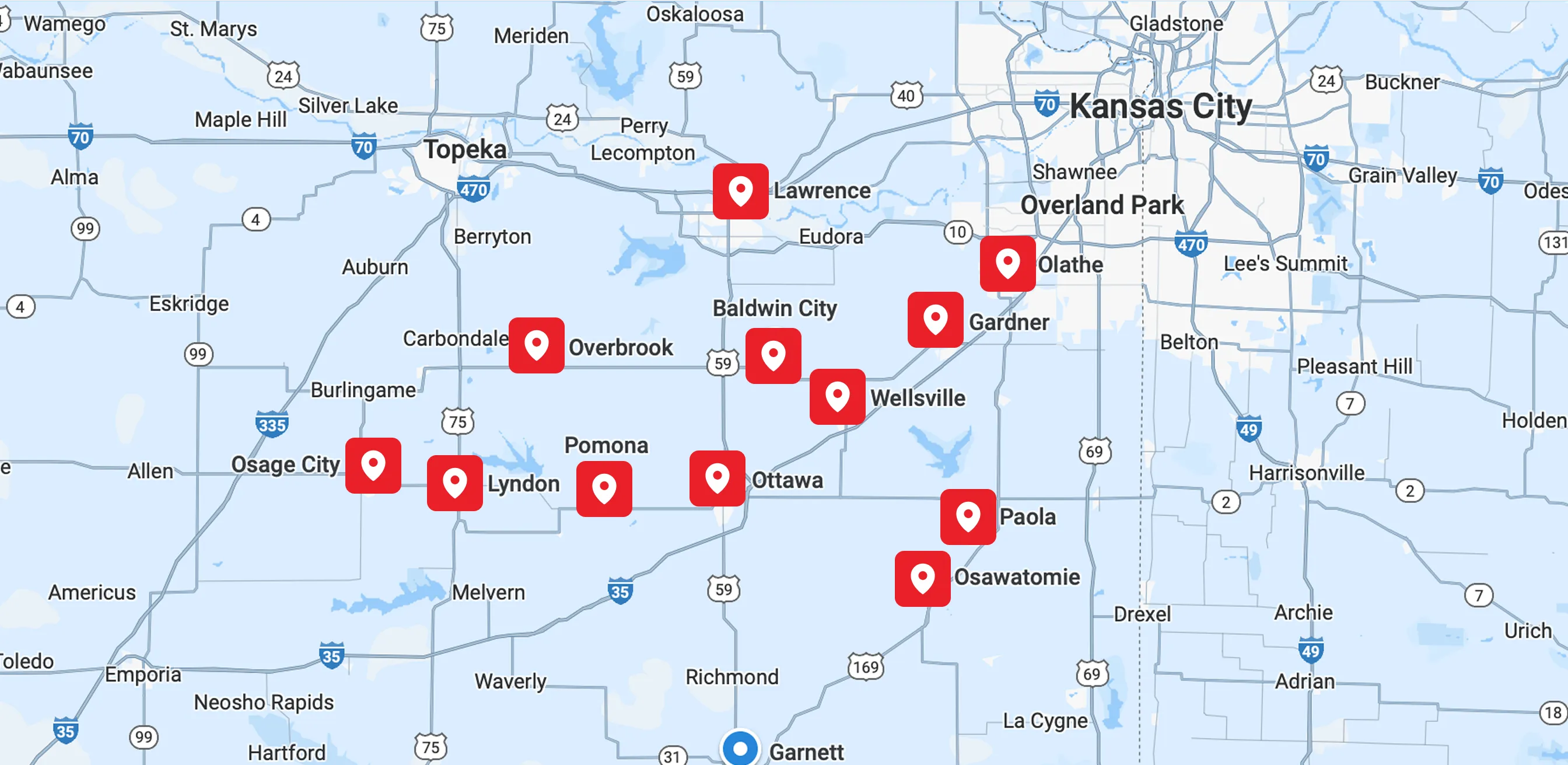
Service Areas