AC Installation in Ottawa, KS
Is Your Old Air Conditioner Struggling With Ottawa Humidity?
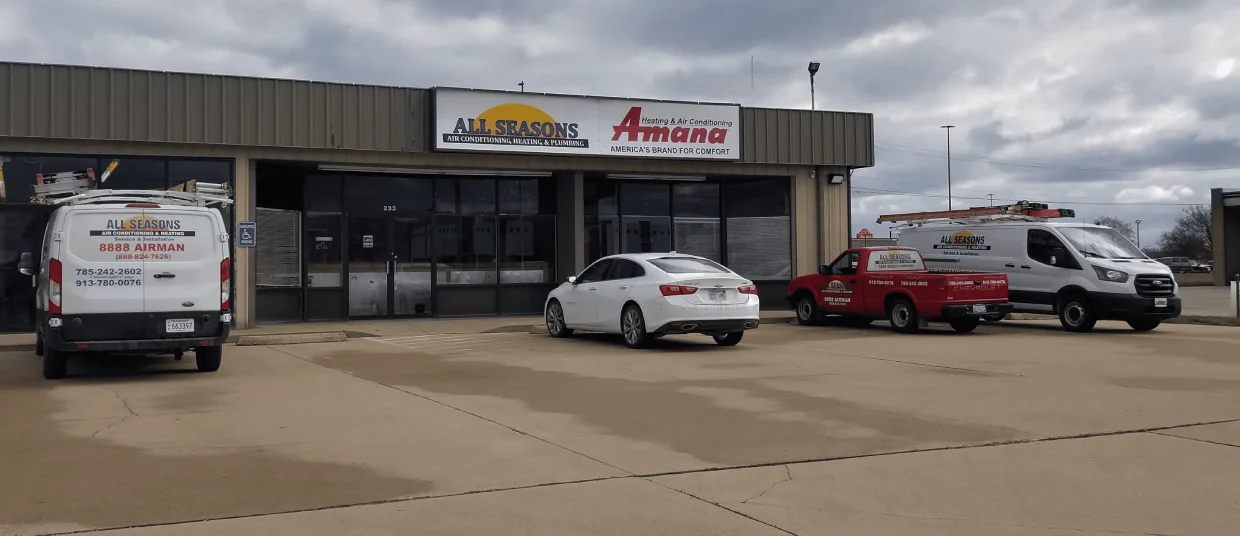
Walking into a home where the AC is running but the air feels heavy and damp is a common sight here in Ottawa. When those classic American Foursquares or mid-century ranch homes near the Marais des Cygnes River start feeling more like a sauna than a sanctuary, it is usually because the cooling system has reached its limit. You need a system that handles both the high heat and that thick Eastern Kansas humidity effectively. All Seasons Air Conditioning, Heating & Plumbing is currently available to help you with your cooling needs.
An older air conditioner does more than just lose its ability to blow cold air. It loses its capacity to pull moisture out of the house, which is essential for comfort in our local climate. When a unit runs for hours without stopping, but the indoor air still feels sticky, the equipment is likely failing to keep up with the environmental load.
Ignoring these performance drops often leads to higher monthly costs and less comfort. Many homeowners find that their utility bills climb every year while their home feels less inviting. All Seasons Air Conditioning, Heating & Plumbing provides expert assessments to help you determine if a new system is the right investment for your property.
.jpg)
Common Signs Your Ottawa Home Needs a New Air Conditioner
Your Cooling System Is Over Fifteen Years Old
The average lifespan for a central air unit that works through our intense Midwestern summers is typically between twelve and fifteen years. After this point, the internal components have endured significant wear, and the efficiency of the unit drops off a cliff. Even if the machine is still spinning, it is likely costing you far more to operate than a modern alternative.
Many of the older homes in our area are still running on equipment installed in the early 2000s. These systems were not built with the high-efficiency standards we see today and are often approaching a total mechanical breakdown. Replacing a unit on your own timeline is much easier than dealing with a sudden failure in the middle of a heatwave.
You Are Facing Frequent and Expensive Repair Bills
A single repair every few years is normal, but if you are calling a technician every season, the system is telling you it is finished. Small parts like capacitors and contactors are easy to swap, but when compressors or evaporator coils start failing, the cost rarely justifies the fix. We often see homeowners spend money on a major repair only to have a different component fail a few weeks later.
If you find yourself repeatedly searching for AC Repair & Service, it might be time to look at the total cost of ownership. Investing that repair money into a modern, warrantied system often makes more financial sense in the long run. A new installation resets the clock on your comfort and eliminates the stress of wondering if the air will turn on tomorrow.
Indoor Air Feels Clammy and Humid
A primary function of your air conditioner is to act as a giant dehumidifier for your home. In Eastern Kansas, the humidity is often just as much of a problem as the temperature. If your thermostat says seventy-two degrees but you still feel sweaty while sitting on the couch, your AC is no longer doing its job.
This is a frequent issue in the older bungalows and two-story homes found throughout the city. As units age, they lose the ability to maintain the long cooling cycles necessary to strip moisture from the air. A properly sized replacement will restore that crisp, dry feeling to your living room and bedrooms.
Your Unit Still Uses Outdated R-22 Refrigerant
If your air conditioner was manufactured before 2010, there is a very high probability that it uses R-22 refrigerant, commonly known as Freon. This substance has been phased out by federal regulations and is no longer being produced or imported. Because the supply is so limited, the cost of recharging an old system with a leak has become incredibly expensive.
When an R-22 system develops a leak, it is usually a sign of internal corrosion in the coils. Attempting to patch these leaks and refill the refrigerant is often a waste of money on obsolete technology. Upgrading to a modern system that uses environmentally friendly refrigerants is the only sustainable way to keep your home cool.
Significant Spikes in Monthly Energy Bills
Have you noticed your Evergy bill creeping up every summer, even though you haven't changed your habits? An aging AC unit has to work much harder and run much longer to achieve the same cooling results as it did when it was new. This constant operation translates directly into higher electricity usage and more wear on the motor.
Modern high-efficiency systems can often cut cooling costs by nearly half compared to units from twenty years ago. When you look at the monthly savings over a decade, a new air conditioner often pays for itself through lower utility requirements. We can help you compare your current energy usage against the projected performance of a new high-SEER unit.
Why Your Current AC System Might Be Failing
Undersized or Oversized Equipment for the House
Many older homes in our area had air conditioning retrofitted long after they were built. In some cases, the original installers may have guessed at the size needed rather than performing a detailed calculation. An oversized unit will turn on and off too quickly, never removing humidity, while an undersized unit will run forever without ever reaching the set temperature.
When we visit your home, we look at more than just the old unit. We evaluate the square footage, the orientation of your windows, and the quality of your insulation to ensure the new system is a perfect match. Getting the size right is the most important step in ensuring long-term reliability and comfort.
Deteriorating Ductwork in Older Construction
The ductwork in many Ottawa homes was originally designed for gravity furnaces or older heating systems that did not require the same airflow as modern AC. Over time, these ducts can leak, collapse, or become restricted by debris. If your ducts are leaking cold air into your crawlspace or attic, your AC has to work twice as hard to cool your living areas.
In many cases, poor cooling isn't just a machine problem; it is a delivery problem. We inspect the integrity of your air distribution system to make sure your new unit isn't being held back by old pipes. If the airflow is restricted, we may recommend Air Duct Cleaning or minor repairs to ensure your new investment performs at its peak.
Mechanical Fatigue from Kansas Summer Cycles
Our climate puts an incredible amount of stress on mechanical equipment. We go from freezing winters to blistering, humid summers, and your outdoor unit sits through all of it. Dust, pollen, and temperature swings cause the metal components to expand, contract, and eventually corrode.
The fan motors and compressors in an outdoor unit are only rated for a certain number of operational hours. Once those bearings wear out or the electrical windings begin to fail, the unit becomes a fire hazard or simply stops moving. Replacing these parts on an old chassis is rarely a good use of your budget compared to a full system upgrade.
What to Expect During Your AC Installation Visit
When our technician arrives at your home, the goal is to provide a clear path to a cooler house. We start by performing a professional load calculation to determine exactly how much cooling power your specific floor plan requires. This isn't a "rule of thumb" guess; it is a scientific measurement that considers every room in your home.
We will take the time to look at your existing indoor and outdoor setup, including the electrical connections and the refrigerant lines. Because many Ottawa properties have unique architectural features, we ensure the new equipment will fit properly and meet all local building codes. We treat your home with respect, using floor protectors and keeping a clean workspace throughout the process.
Once we have the data, we will present you with a few different options that fit your budget and efficiency goals. All Seasons Air Conditioning, Heating & Plumbing technicians will explain the differences between single-stage, two-stage, and variable-speed systems so you can decide what makes the most sense for your family. We want you to feel confident in the equipment you choose before any work begins.
Protecting Your New Investment for the Long Term
A new air conditioner is one of the most significant upgrades you can make to your home. To keep it running like new, it is vital to stay on top of regular maintenance. We always suggest setting up an annual AC Maintenance & Tune-Up to ensure your warranty remains valid and your efficiency stays high.
Beyond the machine itself, we also consider the health of your entire HVAC system. For many of our clients in older neighborhoods, we might discuss how a Heat Pump Installation & Replacement could offer a more efficient way to manage both cooling and heating. Our goal is to look at your home as a complete system, ensuring every part works together to provide the best possible indoor environment.
The Risks of Delaying a Necessary AC Replacement
Waiting until your air conditioner stops completely is a risky gamble. In our region, when the heat hits its peak in July and August, every HVAC company in the county is flooded with emergency calls. If your system fails during a heatwave, you might have to wait days in an uncomfortably hot house before a new unit can be installed.
There is also a hidden financial cost to waiting. Every month you run an inefficient, failing unit, you are essentially throwing money away on your utility bill. A proactive replacement allows you to research your options, take advantage of available utility rebates from Evergy, and schedule the installation at a time that is convenient for you.
Your Trusted Local Team for AC Replacement in Ottawa
We have spent years working on everything from historic Craftsman homes to modern developments in this community. Our technicians understand the specific challenges that Franklin County weather presents to cooling equipment. We are committed to providing honest advice and professional installations that keep your home comfortable for a decade or more.
Whether you are dealing with a total system failure or you are tired of your house feeling like a swamp, we are here to help. Our team takes pride in doing the job right the first time, ensuring your new air conditioner is sized correctly and installed with precision. All Seasons Air Conditioning, Heating & Plumbing is ready to help you find the perfect cooling solution for your Ottawa home.
Customer Testimonials
Service Areas