Whole House Dehumidifiers in Wellsville, KS
Whole-house dehumidification for Wellsville, KS homes from All Seasons Air Conditioning and Heating provides precise RH control, reducing mold risk, moisture-related damage, and energy waste. We outline common humidity issues, in-duct versus standalone options, and sizing guidance based on home size, occupancy, and local climate. We cover installation steps, from load calculations to control integration, and explain how properly sized systems improve comfort, indoor air quality, and efficiency while shortening AC runtimes. Maintenance needs, typical costs, financing, and warranties are detailed to support informed decisions.
.webp)
Whole House Dehumidifiers in Wellsville, KS
Excess humidity is one of the most common and overlooked indoor comfort and health problems in Wellsville, KS. Summers in southeast Kansas are warm and humid, and many older homes and basements in the area develop condensation, musty odors, mold growth, and higher cooling bills because air conditioners must run longer to remove moisture. A properly sized whole house dehumidifier brings relative humidity (RH) into the recommended 45 to 55 percent range, protecting building materials, reducing allergy triggers, improving comfort, and lowering energy use compared with overworking an AC system.
Common whole house dehumidifier issues in Wellsville, KS
- High basement or crawlspace humidity causing mold and wood rot
- Condensation on windows, pipes, and ductwork during late spring and summer
- Persistent musty or mildew smells in finished basements and closets
- Allergies and increased dust-mite activity linked to chronic humidity above 60% RH
- AC short-cycling and high energy bills from latent load removal
Whole-home options: in-duct vs standalone whole-home dehumidifiers
- In-duct (plenum or bypass) dehumidifiers
- Installed into the HVAC return or supply plenum and use the central air handler for airflow.
- Good for whole-house control and discrete installation out of living areas.
- Best when integrated with existing ductwork and thermostat controls.
- Dedicated standalone whole-home units (ducted and non-ducted)
- Self-contained systems that can be installed in mechanical rooms, basements, or attics.
- Often include their own fan and condensate management and can serve homes without extensive duct modifications.
- Useful for homes with multiple humidity sources or when higher capacity is needed.
Sizing and humidity load considerations
Correct sizing is crucial. A dehumidifier’s capacity is rated in pints per day under specific conditions. Sizing depends on:
- Home square footage and ceiling height
- Number of occupants and occupant activities (laundry, cooking, showers)
- Common humidity sources: crawlspaces, basements, unsealed combustion appliances, attached garages
- Local climate factors: Wellsville experiences humid summers and variable spring/fall moisture that raise latent loads
Typical guidance: - Small homes or light loads: 30 to 50 pints/day
- Medium homes or moderate loads: 50 to 70 pints/day
- Large homes, basements, or high humidity loads: 70+ pints/day
A professional load assessment that measures baseline RH and evaluates sources will produce an accurate sizing recommendation.
Installation steps and technical details
Energy efficiency and indoor air quality improvements
- Modern whole-house dehumidifiers are more efficient than running additional AC because they target latent heat removal specifically. Look for AHRI or manufacturer efficiency ratings when comparing models.
- Bringing RH down to 45–55% reduces mold and dust mite populations, eliminates musty odors, protects wood and painted surfaces, and often shortens AC runtime.
- Properly sized systems reduce overall HVAC runtime, which can lower energy costs and extend equipment life. Smart integrations enable humidity-based control rather than constant-on operation.
Maintenance requirements and troubleshooting guidance
Routine maintenance keeps performance high:
- Clean or replace intake filters every 1 to 3 months depending on use and indoor air quality.
- Annual coil and drain pan inspection and cleaning to prevent biological growth and clogs.
- Check condensate pump operation and clean the drain line to avoid backups.
- Verify humidistat calibration and control communications with the HVAC system.
Common troubleshooting tips: - Unit running but not removing moisture: check filter, verify airflow, confirm correct sizing for the load.
- Freezing coils: often caused by low airflow or very low temperature in the mechanical space; ensure proper airflow and consider a defrost mode model if needed.
- Leaks or overflowing drain: inspect condensate lines, clean traps, and verify pump operation and float switch function.
- Unit does not start: check electrical supply, circuit breaker, and thermostat/humidistat settings.
Cost estimates and what affects price
Cost varies by capacity, configuration, installation complexity, and control integration. Typical ranges:
- Entry level whole-house units (smaller capacity, simpler installs): $1,200 to $2,000 installed
- Mid-range in-duct or standalone whole-home units with integrated controls: $2,000 to $3,500 installed
- High-capacity commercial models, complex duct modifications, or difficult condensate routing: $3,500 to $6,000+ installed
Factors that raise cost include large home square footage, need for ductwork modification, condensate pump or long drain runs, electrical upgrades, and integration with smart controls.
Financing, plans, and warranties
Residential and commercial customers commonly choose between one-time purchase with manufacturer warranty and ongoing maintenance plans. Typical plan elements:
- Residential maintenance agreements: annual or biannual inspections, filter changes, priority scheduling, and discounts on repairs.
- Commercial plans: customizable schedules (quarterly or monthly), equipment monitoring, and preventive maintenance tailored to business needs.
Manufacturer warranties vary by model and component; common coverage includes 1 to 5 years on parts and longer compressor warranties on some units. Extended warranties and service agreements are available to cover labor and routine maintenance beyond the factory warranty.
Why timely dehumidification matters in Wellsville, KS
Addressing humidity proactively prevents mold remediation expenses, preserves structural materials, lowers allergy triggers, and improves year-round comfort. A correctly selected and professionally installed whole house dehumidifier tailored to Wellsville climate and your home’s specific moisture profile provides measurable indoor air quality improvements and energy savings versus reactive fixes. Regular maintenance agreements and appropriate warranties keep those benefits reliable over the long term.
Customer Testimonials
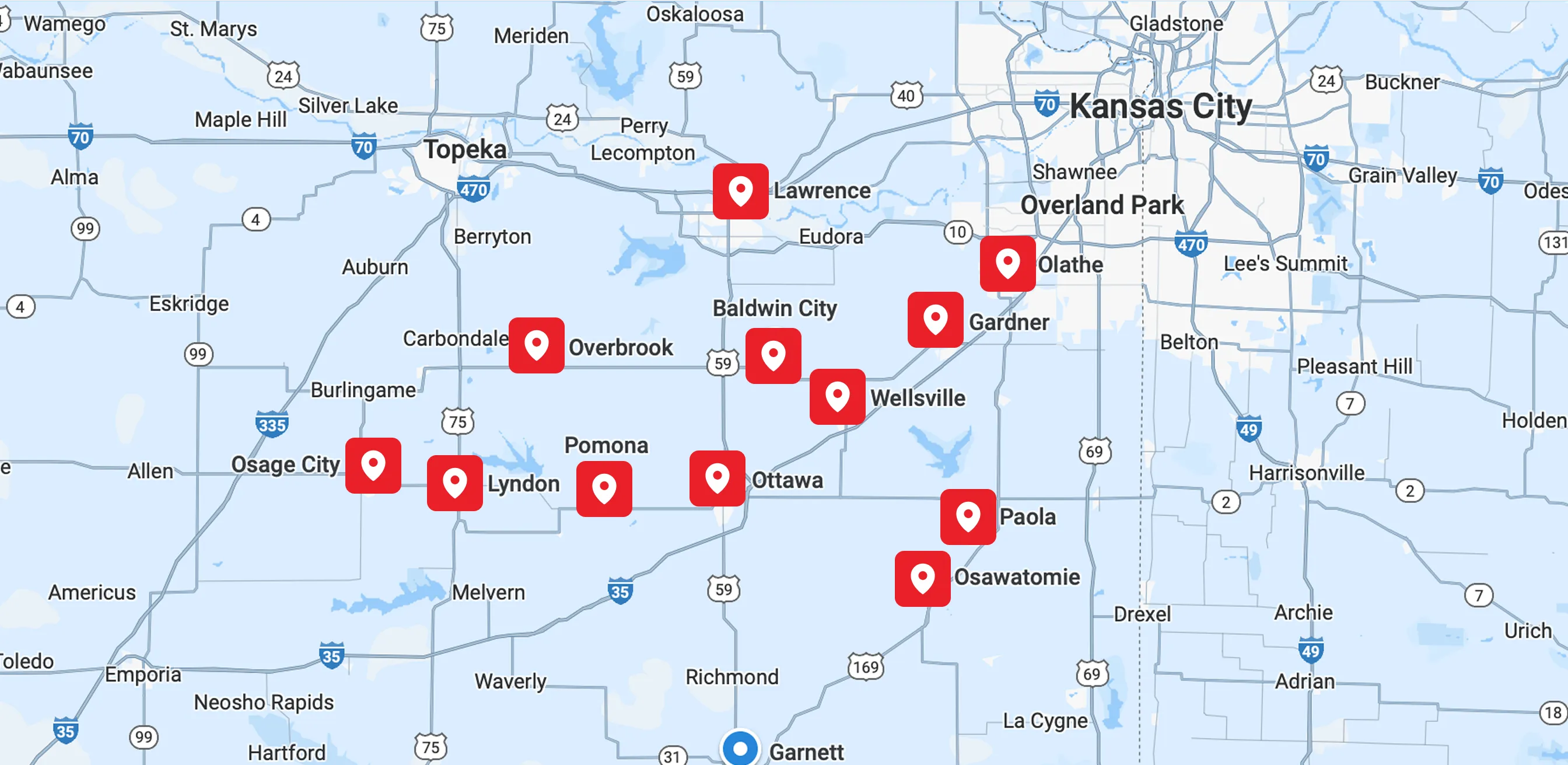
Service Areas