Tankless Water Heater Maintenance in Pomona, KS
Tankless water heater maintenance in Pomona, KS from All Seasons Air Conditioning and Heating offers proactive care to prevent mineral scale, sediment buildup, and equipment faults. Our tailored program addresses local groundwater challenges, seasonal freezing risks, and remote system components, reducing unexpected breakdowns and preserving efficiency. A professional visit includes descaling, flushing, filter cleaning, burner inspection for gas units, electrical checks for electric units, performance testing, leak checks, and clear recommendations. Regular maintenance extends life, sustains warranties, lowers energy use, and keeps hot water consistent for Pomona homes.
.jpeg)
Tankless Water Heater Maintenance in Pomona, KS
Keeping a tankless water heater running efficiently requires more than occasional troubleshooting. In Pomona, KS, where seasonal temperature swings and locally mineral-rich groundwater can accelerate scale buildup, routine tankless water heater maintenance protects comfort, preserves system life, and prevents unexpected service calls. This page explains what a thorough maintenance program includes, common local issues, recommended schedules, and the preventive repairs that keep tankless systems performing at peak efficiency.
Why regular tankless water heater maintenance matters in Pomona, KS
Tankless units are compact and efficient, but they are sensitive to mineral scale, sediment, and combustion or electrical issues. In Pomona homes:
- Mineral-laden groundwater increases the frequency of scale accumulation on heat exchangers.
- Cold winter temperatures heighten the risk of freeze-related damage for exterior or poorly protected units.
- Rural water supplies or well systems can carry sediment and debris that clog inlet screens and filters.
Routine maintenance reduces breakdowns, restores hot water flow, maintains energy efficiency, and helps preserve manufacturer warranties.
Common tankless water heater issues in Pomona, KS
Understanding common problems helps prioritize maintenance:
- Scale buildup on heat exchanger — Reduces heat transfer, lowers flow and temperature, triggers error codes.
- Clogged inlet filters and screens — Restrict water flow and reduce performance.
- Ignition or burner irregularities (gas units) — Soiling of burners or venting issues can lead to incomplete combustion, reduced heat output, or safety lockouts.
- Electrical and control faults (electric units) — Faulty sensors or wiring can shut down the unit or produce inconsistent temperatures.
- Reduced flow rate and poor temperature rise — Often a sign of internal restriction or mineral coating inside the heat exchanger.
- Freeze exposure and venting problems — External units and vent terminations are vulnerable to winter conditions if not inspected and insulated.
Recommended maintenance schedule
A maintenance schedule should be tailored to local water quality, household size, and unit usage. Typical recommendations for Pomona homeowners:
- Every 6 months: For homes with well water or known hard water, or for larger households with heavy hot-water demand.
- Annually: For homes on municipal supplies with moderate mineral content and average usage.
- Seasonal check (pre-winter): Inspections to ensure outdoor units and venting are protected against freezing and to verify condensate/drain lines are clear.
What a professional maintenance visit includes
A comprehensive service visit focuses on both prevention and performance verification. Typical steps:
- Descaling and flushing of the heat exchanger
- A controlled flush using a descaling solution (or recommended descaler) removes scale from internal passages to restore heat transfer.
- For severe scale, a technician will repeat descaling cycles and re-test outlet temperatures and flow.
- Filter and inlet screen cleaning
- Remove and clean screens and inline filters to restore proper flow and pressure.
- Inspection and cleaning of burners and combustion components (gas units)
- Visual inspection and cleaning of burners, pilot assemblies, and venting to ensure safe, efficient combustion.
- Check vent terminations, flues, and seals for obstructions or deterioration.
- Electrical and control system check (electric units)
- Verify wiring, connections, sensors, and control logic for proper operation and fault codes.
- Performance testing
- Measure flow rate, supply-to-output temperature rise, and compare to manufacturer specifications.
- Check for diagnostic error codes and run a full startup/shutdown sequence to confirm reliability.
- Leaks and fittings inspection
- Inspect plumbing connections, pressure relief device (if present), condensate drains, and gas connections for leaks or corrosion.
- Preventive repairs and parts inspection
- Assess condition of ignition components, thermistors, anode (if applicable), fittings, and recommend replacement of items showing wear.
- Documentation and recommendations
- Provide a concise report on findings, remaining expected life, and any recommended follow-up repairs or upgrades.
Descaling and flushing — what it looks like (high level)
A safe, effective descaling process involves:
This procedure restores efficiency and prevents premature component failure. For gas units, combustion systems are inspected and tested only by trained technicians.
Preventive repairs and commonly replaced parts
Regular maintenance often uncovers items that benefit from proactive replacement to avoid downtime:
- Inlet screens and inline filters
- Ignition assemblies and flame sensors (gas units)
- Flow sensors and thermistors
- Condensate traps and drain tubing
- Pressure relief components and gaskets
Replacing worn components during maintenance visits is usually less costly than emergency repairs and reduces outages.
Maintenance plans and service agreements
Maintenance plans for Pomona homeowners typically bundle routine inspections, priority scheduling, and discounted parts/labor. Common plan features include:
- Scheduled descaling and cleaning visits on a 6- or 12-month cadence
- Priority appointments during peak seasons (cold months)
- Discounted diagnostic and repair labor rates
- Documentation of service history to support warranty requirements
Service agreements provide predictability and can be especially valuable in areas with harder water or seasonal freeze risk.
Long-term benefits for Pomona homes
Consistent tankless water heater maintenance delivers measurable advantages:
- Restored or improved hot water flow and temperature consistency
- Lower energy bills through maintained efficiency
- Extended equipment life and preserved manufacturer warranty eligibility
- Fewer emergency repairs and reduced risk of winter-related failures
- Better indoor comfort for families near Pomona Lake and surrounding communities
Maintenance also helps you identify when a system is nearing the end of its cost-effective life so you can plan upgrades on your schedule.
Practical homeowner tips for Pomona, KS
- Check and clean visible inlet screens every few months, especially if you use a private well.
- Consider a water test or speaking with a technician about water hardness; installing a softener or point-of-entry treatment reduces descaling frequency.
- Insulate exterior pipes and check vent terminations before the first freeze.
- Keep a record of maintenance visits—many warranties require documented service.
Routine, professionally performed tankless water heater maintenance tailored to Pomona, KS conditions prevents costly failures and keeps your system running safely and efficiently for years.
Customer Testimonials
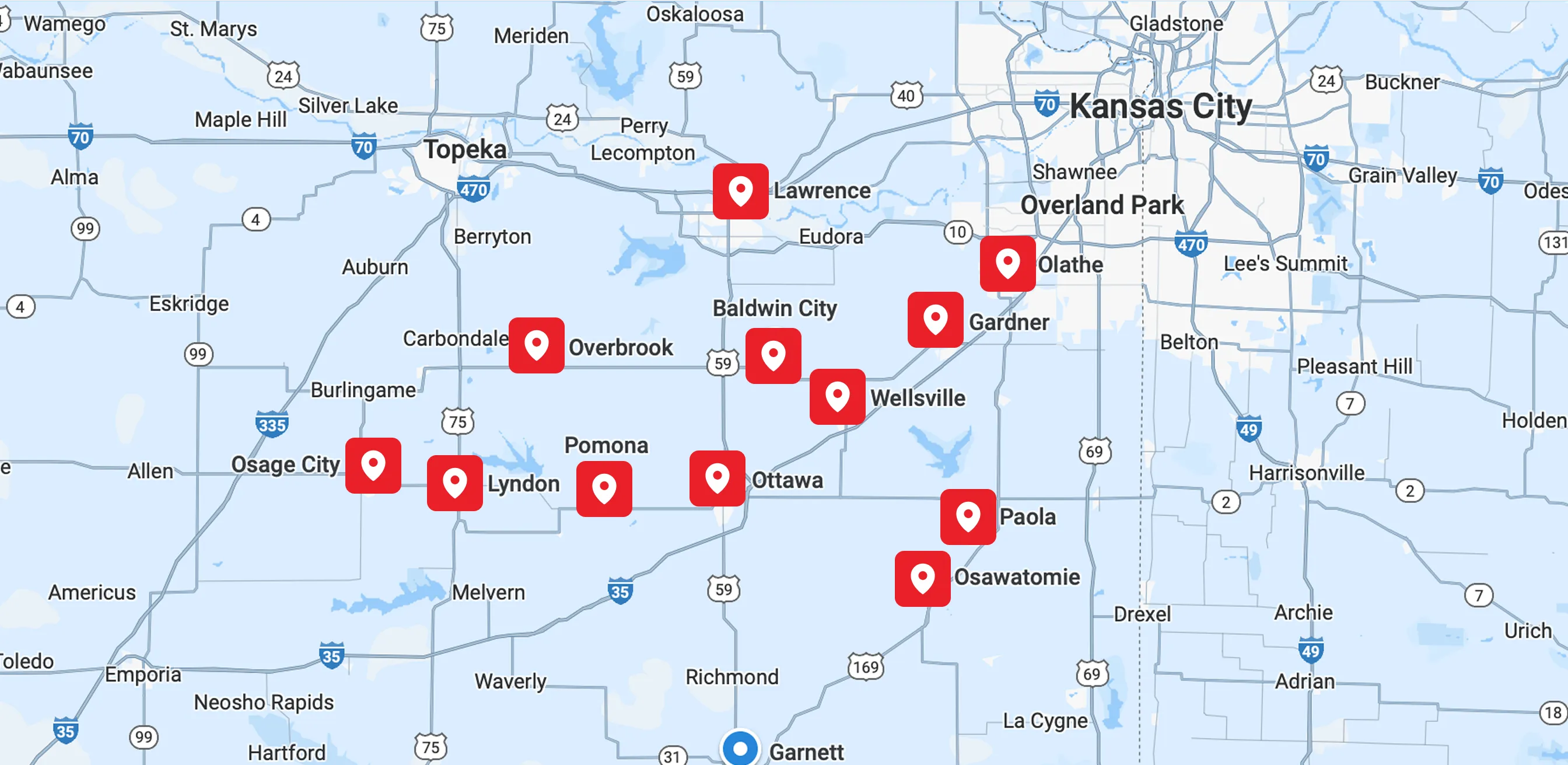
Service Areas