
Whole House Dehumidifiers in Vassar, KS
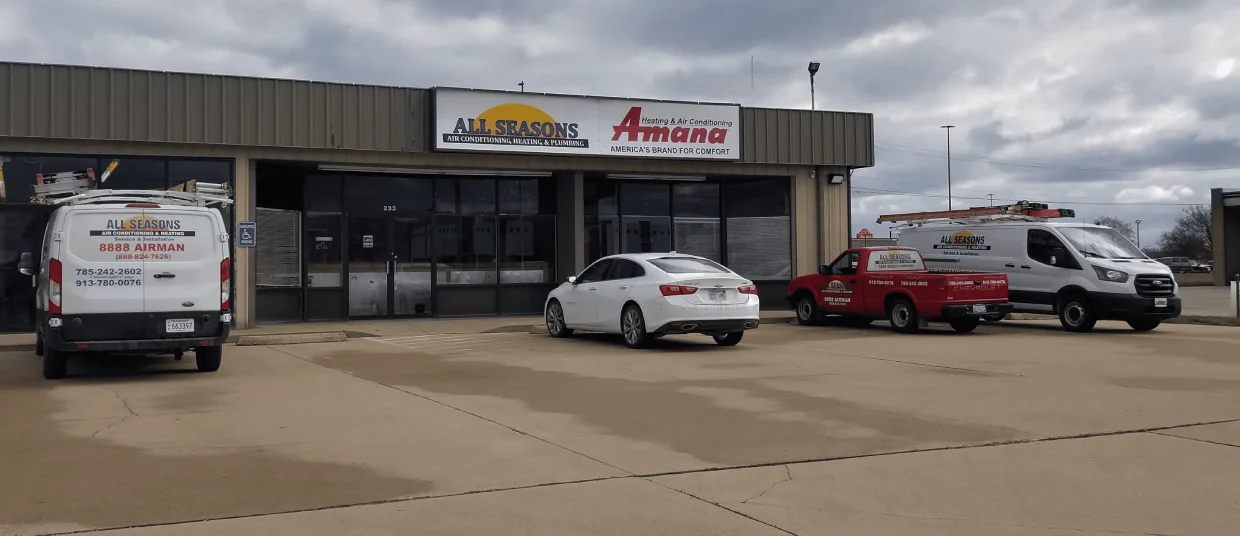
Vassar, KS homeowners can learn how whole-house dehumidifiers integrated with central HVAC from All Seasons Air Conditioning and Heating control moisture year-round, improve comfort, and protect building materials. Our guide covers operation modes, including continuous dehumidification and humidity-triggered control, compares whole-home units with portable compressors, and explains sizing, installation, and duct integration. We highlight benefits for basements and multi-level homes, outline common issues, and detail maintenance, warranty, and financing considerations. Proper selection and professional installation ensure energy efficiency, reduced humidity, and long-term reliability.
.webp)
Whole House Dehumidifiers in Vassar, KS
Keeping indoor humidity under control is a year-round comfort and health concern in Vassar, KS. Humid summers, temperature swings in shoulder seasons, and older foundation and ductwork in many area homes combine to create conditions where excess moisture leads to musty odors, mold growth, warped wood, and inefficient cooling. Whole house dehumidifiers integrated with central HVAC provide a reliable, energy-smart solution that treats the entire living space rather than one room at a time. This page explains how integrated systems work, how they differ from portable units, how sizing and installation are determined, and what homeowners and commercial property managers in Vassar should expect for performance, maintenance, and long-term value.
How whole-house dehumidifiers work with central HVAC
Whole-home dehumidifiers are installed as part of the central air system, typically within the return plenum, next to the air handler, or in the mechanical room. They remove moisture directly from the air stream before conditioned air is redistributed. Common modes of operation include:
- Continuous dehumidification where the unit runs as needed to keep relative humidity (RH) at a setpoint (commonly 40-50%).
- Demand-based control using a humidity sensor to activate the dehumidifier independently of the cooling call.Integration benefits include consistent RH control throughout the house, less reliance on air conditioning to remove moisture, and improved comfort in basements, crawlspaces, and second-floor rooms.
Whole-home units vs portable dehumidifiers
Understanding the differences helps set expectations:
- Whole-home dehumidifiers
- Treat the entire ducted living space evenly
- Connect to existing drain and electrical systems
- Are more energy-efficient for large homes and long-term use
- Require professional sizing and installation
- Portable dehumidifiers
- Are room-specific and require manual emptying or a condensate hose
- Are less noisy and lower upfront cost for small spaces
- Can’t provide balanced RH throughout a multi-zone homeFor Vassar homes with basements, older insulation, or multi-level layouts, a whole-house solution is usually the most effective and lowest-cost-to-operate over time.
Common whole-house dehumidifier issues in Vassar, KS
Local weather and building stock contribute to typical problems:
- High seasonal attic or basement humidity leading to mold and mildew
- Frequent condensation on windows in spring and fall
- Ice or freezing risk in crawlspaces during winter when moist air meets cold surfaces
- Overworked air conditioning because moisture load forces longer run times
- Inadequate ductwork or poor return placement that reduces dehumidifier effectivenessRecognizing these patterns helps inform proper equipment selection and duct integration.
Sizing and moisture-load calculations
Proper sizing is critical to avoid underperformance or wasted energy. A professional moisture-load assessment considers:
- Square footage and ceiling height of conditioned spaces
- Number of occupants and typical occupancy patterns
- Local climate data (average summer dew points and seasonal precipitation)
- Sources of moisture such as attached garages, unvented crawlspaces, pools, or humidifiers
- Building envelope tightness and ventilation ratesSizing is expressed in pints per day (ppd) removed at specified conditions; the selected unit should handle peak local loads while modulating at lower demands to prevent cycling.
Installation and duct-integration options
Multiple installation approaches suit different homes:
- Plenum-mounted units installed directly on the return plenum for centralized airflow
- Side-stream or remote-mounted units when space near the air handler is limited
- Dedicated duct runs to treat specific problem areas like basements or finished lower levelsA quality installation addresses condensate drainage (sloped PVC, trap, or condensate pump as needed), electrical circuiting, and proper placement of a calibrated humidity sensor. For Vassar residences, installers also evaluate insulation and ventilation strategies to reduce external moisture influx.
Benefits: health, comfort, and durability
Installing a whole-house dehumidifier in Vassar homes delivers tangible advantages:
- Mold and mildew prevention by keeping RH below levels that support microbial growth
- Improved indoor air quality through reduced dust mite populations and fewer musty odors
- Increased comfort with less clamminess indoors while allowing thermostats to be set higher without sacrificing perceived coolness
- Protection of building materials — hardwood floors, cabinetry, drywall, and painted surfaces last longer with stable humidity
- Potential HVAC efficiency gains since dehumidification reduces the cooling load in humid months
Energy-efficiency considerations
Modern whole-house units use advanced controls and variable-speed components to match moisture removal to need. Energy considerations include:
- Choosing a unit with humidity-focused control rather than relying solely on air conditioner dehumidification
- Matching unit capacity to load to avoid short cycling, which reduces efficiency and lifespan
- Using energy recovery ventilation or controlled ventilation to balance fresh air needs without increasing humidityA properly integrated system will generally consume less energy than oversized portable units used to cover multiple spaces.
Maintenance, filters, and coil care
Routine maintenance keeps performance optimal:
- Clean or replace intake filters periodically per manufacturer guidance
- Inspect and clean coils and drain pans to prevent mold or blockages
- Verify condensate drain lines are clear and slope properly; check condensate pumps if installed
- Calibrate humidity sensors annually to ensure accurate RH controlMany residential and commercial maintenance plans include scheduled dehumidifier checks, filter replacements, and system performance reviews.
Common signs you need whole-house dehumidification and troubleshooting tips
Watch for these indicators of excess moisture:
- Persistent musty odors or visible mold spots
- Window condensation in non-winter months or persistent dampness on walls and floors
- Frequent HVAC short cycling or inability to reach comfort setpoints despite low thermostat temperatures
- Allergic symptoms that improve outside the homeBasic troubleshooting steps:
- Confirm RH reading from an independent hygrometer to verify sensor accuracy
- Check filters and air handler airflow for restrictions
- Inspect condensate lines and pan for clogs or standing water
- Ensure outdoor vents and foundation vents are sealed or managed correctly to limit moisture entryIf problems persist, a professional diagnostic will measure airflow, static pressure, and moisture loads to pinpoint the remedy.
Warranty, financing, and maintenance-plan options
Whole-house dehumidifiers are covered by manufacturer warranties that typically address parts and compressors for varying terms; extended protections are commonly available through dealer programs. Financing arrangements are frequently offered by local HVAC providers to spread the investment over time. Maintenance-plan options range from annual inspection and filter replacement for residential systems to tailored commercial programs with scheduled visits and priority service. Understanding warranty coverage and recommended maintenance intervals helps preserve performance and manufacturer protection.
ConclusionFor Vassar, KS homes and businesses facing elevated indoor humidity, whole-house dehumidification provides a comprehensive solution that improves indoor air quality, protects building materials, and reduces HVAC strain. Proper sizing, professional integration with your central system, and routine maintenance are the keys to long-term performance. A careful assessment of moisture loads and duct layout will determine the most efficient system type and installation approach for a given property.
Customer Testimonials
Service Areas