Whole House Dehumidifiers in Overbrook, KS
Overbrook homeowners seeking relief from humidity can truly benefit from a whole-house dehumidifier from All Seasons Air Conditioning and Heating. This page outlines why humid air matters, common moisture problems, and three main system types, along with sizing guidance and HVAC compatibility. We explain installation, control options, and drainage, plus energy-efficiency considerations and routine maintenance. We also cover pricing, warranties, financing, and maintenance plans, emphasizing the long-term value of a properly sized, professionally installed solution for comfort, health, and protecting building materials over time.
Whole House Dehumidifiers in Overbrook, KS
Excess indoor humidity is a common problem in Overbrook homes, especially during hot, humid summers and transitional spring months. Whole house dehumidifiers control moisture across every room, protecting wood floors, finished basements, HVAC equipment, and your family’s health by reducing mold, dust mites, and allergy triggers. This page explains why a whole house dehumidifier is likely the right decision for Overbrook residents, how systems are selected and installed, and what to expect for maintenance, efficiency, and long term value.
Why whole house dehumidification matters in Overbrook, KS
- Overbrook’s humid summers and temperature swings encourage condensation in basements, crawl spaces, and inside walls.
- High relative humidity promotes mold growth, musty odors, and increased allergen activity that affect indoor air quality and comfort.
- Lower humidity protects wood trim, musical instruments, electronics, and drywall from moisture damage and staining.
- Controlling moisture improves perceived comfort so you can run your thermostat at a slightly higher setpoint while feeling the same or better, saving energy.
Common humidity problems in local homes
- Musty basement or crawl space odors after rains.
- Visible mold or mildew in bathrooms, closets, or behind furniture.
- Frequent condensation on windows and cold water lines in warm months.
- Sticky, uncomfortable indoor air despite air conditioning.
- HVAC systems short-cycling or struggling because ducts are pulling in humid return air.
Types of whole house dehumidifiers
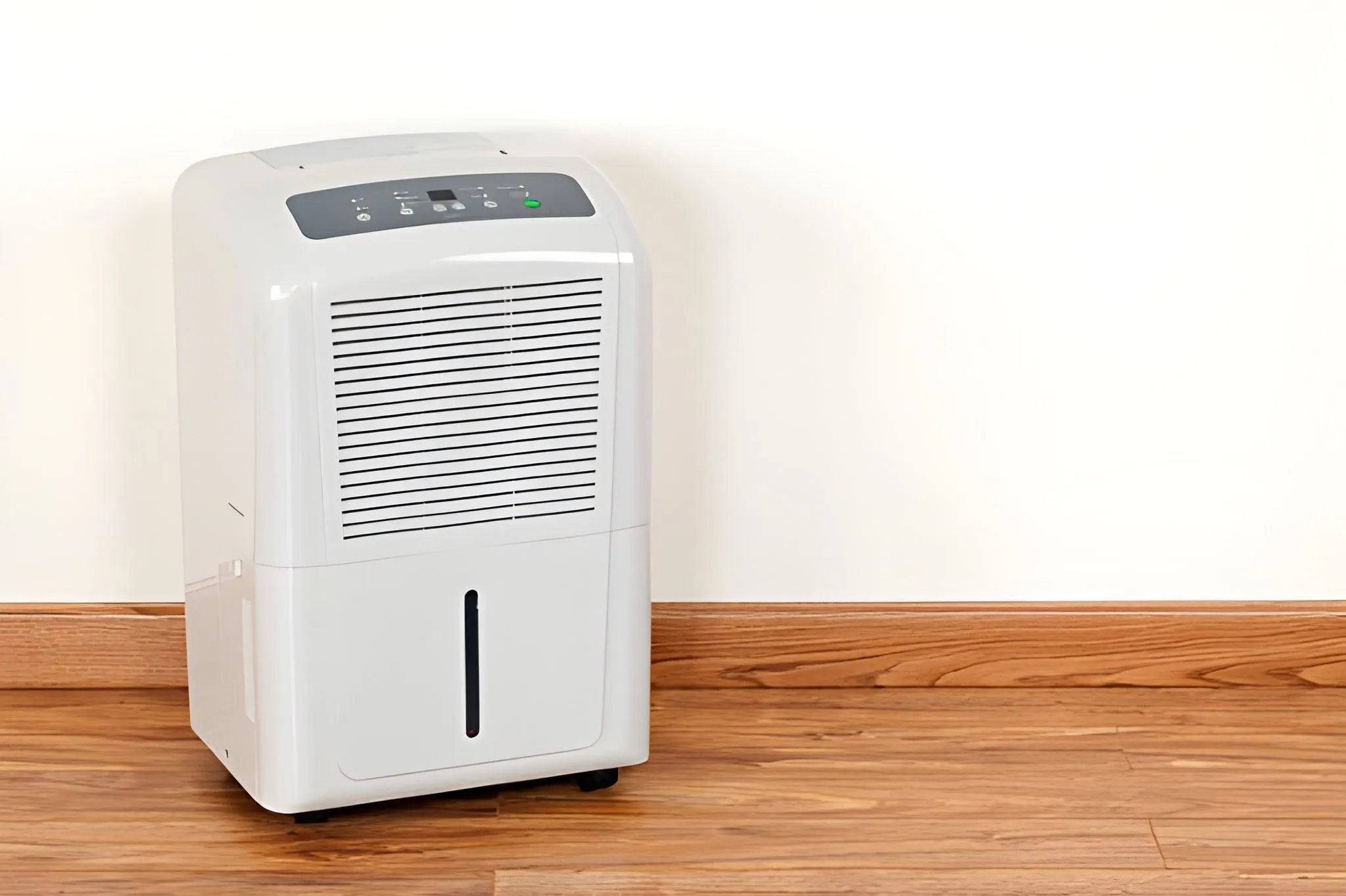
- Ducted refrigerant (compressor-based) systems: Best for typical residential applications in Overbrook. They remove large volumes of moisture efficiently at common indoor temperatures. These integrate into the HVAC return or plenum and use the home’s blower for distribution.
- Desiccant dehumidifiers: Use a moisture-absorbing material and excel in lower temperature or specialized commercial settings. They are less common for standard Overbrook homes but useful in unconditioned spaces or industrial applications.
- Integrated HVAC or standalone cabinet units: Cabinet-style whole-house units mount beside the air handler or inside mechanical rooms and are sized by pints per day and airflow compatibility.
Sizing and HVAC compatibility
Correct sizing is essential. Technicians calculate capacity based on:
- Square footage and ceiling height.
- Conditioned vs unconditioned space (finished basement counts differently).
- Local climate load: Overbrook’s summer moisture load is a key factor.
- Air exchange rates and sources of moisture (gutters, grading, crawl spaces, plumbing leaks).
Typical capacity ranges:
- Small homes or tight 1,000 to 1,500 sq ft spaces: 40 to 70 pints per day.
- Medium homes 1,500 to 2,500 sq ft: 70 to 100 pints per day.
- Large or high-moisture homes and basements: 100 to 140+ pints per day.
A professional assessment includes checking the existing HVAC blower, duct layout, and return location to determine whether the dehumidifier will connect to the system return, be mounted inline, or be a separate cabinet. Proper ductwork sealing and insulation are often recommended to maximize performance.
Diagnostic and assessment process
- Measure current relative humidity and dew point in multiple rooms with calibrated tools. Ideal indoor relative humidity is typically 40 to 50 percent.
- Inspect basements, crawl spaces, attic penetrations, windows, and exterior grading to find moisture entry points.
- Evaluate existing HVAC equipment, airflow, and duct condition for compatibility.
- Recommend the appropriate system type and capacity and estimate drainage and electrical requirements.
Installation and control options
- Installation steps: site preparation, system mounting (cabinet or inline), duct connections, condensate drain routing (gravity or condensate pump), electrical hookup, and controls pairing. Most installations require minimal disruption when planned correctly.
- Controls: simple humidistats, integrated thermostat control, or smart Wi-Fi humidistats for remote monitoring and scheduling. Many homeowners prefer a standalone humidistat set to maintain 45 percent RH for comfort and mold prevention.
- Drainage: systems can tie into existing HVAC condensate drains, plumb to a utility drain, or use a condensate pump for locations without gravity drains.
Energy-efficiency considerations
- Choose ENERGY STAR rated or high-efficiency models when available to reduce operating costs.
- Systems that use the HVAC blower for distribution are typically more efficient than stand-alone portable units when serving the whole home.
- Variable-speed compressors and fans offer better performance across seasons and reduce energy use.
- Properly sized systems avoid short cycling and excessive runtime, saving energy and extending equipment life.
Maintenance and cleaning
- Recommended checks twice per year: clean or replace pre-filters, inspect condensate drain lines, verify defrost and controls, and clean coils if needed.
- Keep clearances around the unit and maintain good attic/utility room ventilation.
- Monitor for unusual noises or persistent humidity above setpoint; these indicate the need for service.
- Typical homeowner tasks: check and clean the intake filter every 1 to 3 months and confirm drain line is clear.
Pricing, warranty, and financing
- Pricing varies by system type, capacity, and installation complexity. Typical installed costs for whole house dehumidifiers range widely based on home size and integration needs. An accurate estimate comes from an on-site assessment that accounts for duct modifications, electrical work, or condensate pump installation.
- Manufacturer and installer warranties usually cover parts and compressors; common coverage includes 1 to 5 years for parts and extended compressor warranties on select models. Labor warranties for installations vary by contractor.
- Financing options are often available for equipment purchases and installations through third-party lenders or dealer financing programs, allowing homeowners to spread payments over time.
Commercial and residential maintenance plans
- Residential plans typically include scheduled inspections, filter changes, priority service, and discounts on repairs. Regular maintenance helps sustain dehumidifier performance and protects warranty coverage.
- Commercial plans can be customized for frequency, multiple units, and integrated refrigeration or process needs, with options for quarterly or monthly service visits and on-call support.
Final benefits and long-term considerations
Installing a whole house dehumidifier in Overbrook keeps humidity in a healthy range, reduces allergy and mold risks, protects building materials and furnishings, and can improve overall HVAC efficiency. For homeowners experiencing persistent dampness, musty odors, or mold concerns, a properly sized and installed whole house system provides a reliable, low-maintenance solution that pays back through better comfort and fewer repairs over time.
For the best results, begin with a thorough home humidity assessment to determine the right system type and size for your Overbrook property, and schedule regular maintenance to preserve performance and warranty coverage.
Customer Testimonials
Service Areas