Air Purification in Eudora, KS
All Seasons Air Conditioning and Heating offers air purification services for Eudora, KS, outlining whole-house and portable solutions, how technologies remove pollutants, and how to size, place, and install equipment. Our EPA-certified technicians perform assessments, recommend options, verify compatibility, and deliver commissioning, documentation, and ongoing maintenance plans. Our guide covers expected results, cost factors, and deliverables such as reports, installation, performance verification, warranties, and maintenance schedules. We emphasize measuring particulates, humidity, and VOCs to tailor a right-sized strategy for allergy and asthma management.
Air Purification in Eudora, KS
Clean indoor air is essential in Eudora homes where spring and summer pollen, seasonal agricultural dust, and occasional smoke can aggravate allergies and asthma. Whether you live near rural fields or in town, effective air purification reduces airborne particles, neutralizes odors and VOCs, and lowers the risk of respiratory irritation. This page explains whole-home and standalone options, how common technologies work, how to size and place equipment, what professional installation and maintenance look like, and what deliverables and cost factors to expect. All work is performed by EPA-certified technicians familiar with Eudora area conditions and home systems.
Common air purification solutions for Eudora homes
- Whole-home filtration integrated with your HVAC system
- High-efficiency HVAC filters (MERV 11-16) capture large to fine particles across the whole house when the system runs.
- In-duct HEPA or HEPA-style modules provide much finer particle removal while requiring careful compatibility checks with your furnace or air handler.
- UV germicidal lamps installed at the coil or in the return duct reduce microbial growth and help keep the HVAC system cleaner.
- Activated carbon beds in-duct or combined with HEPA for VOC, smoke, and odor control.
- Standalone/portable air purifiers
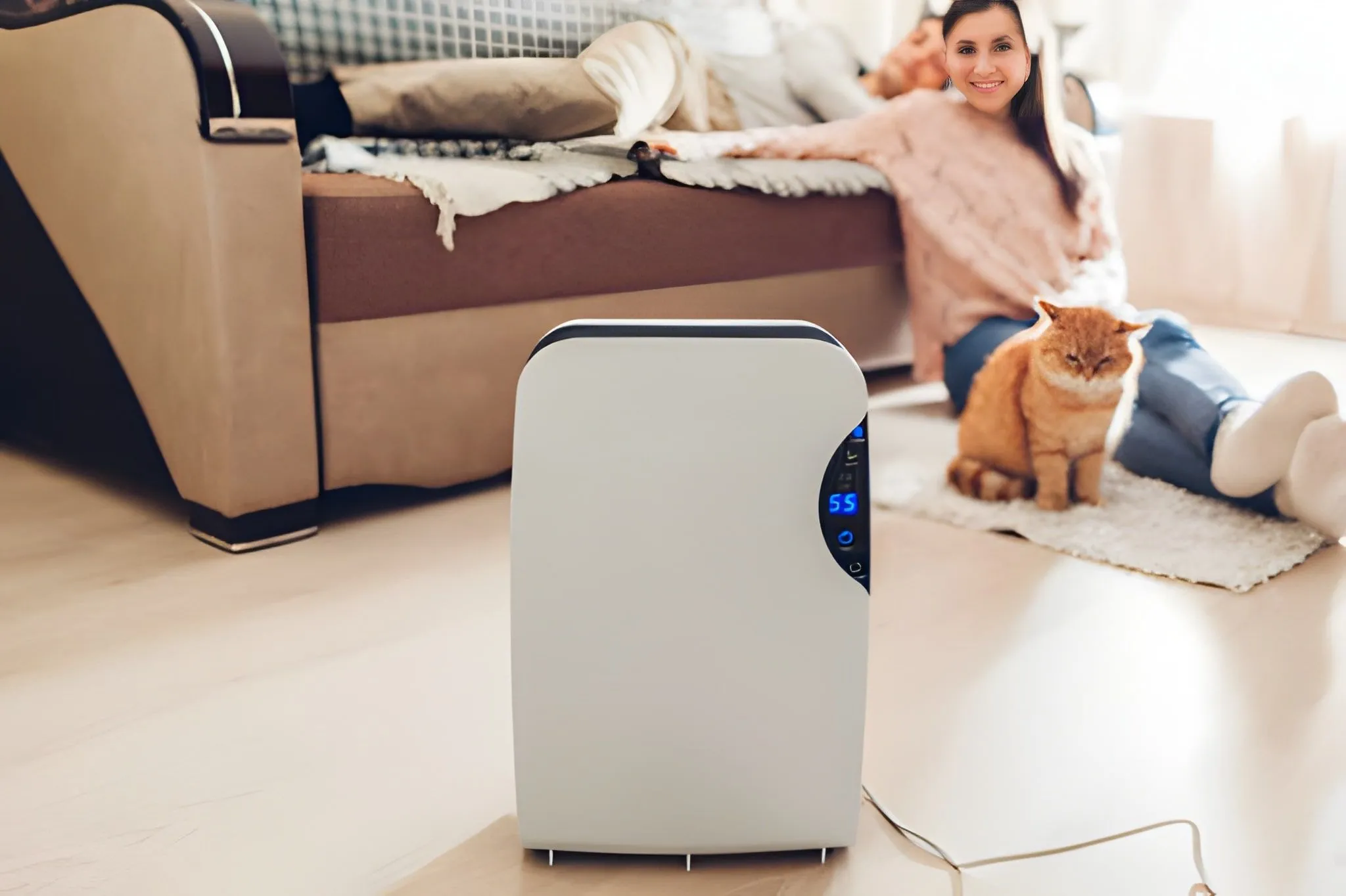
- Portable HEPA units sized for individual rooms provide targeted removal of pollen, pet dander, smoke, and dust.
- Portable units are useful in bedrooms, living rooms, or for temporary smoke or renovation events.
- Electronic and ionization technologies
- Electronic precipitators and ionizers can reduce particle counts but may produce trace ozone or require frequent cleaning; choose low-ozone certified models and professional installation.
- Bipolar ionization reduces some particles and VOCs but performance varies by brand and installation. Pair with filtration for best results.
How the technologies remove pollutants
- HEPA filtration physically captures particles down to 0.3 micron with very high efficiency. Best for pollen, dust, pet dander, and many fine particulates.
- UV germicidal irradiation damages DNA/RNA of bacteria, viruses, mold spores, and helps keep coils and drain pans free of biological growth. UV does not remove particles by itself.
- Activated carbon adsorbs gases, volatile organic compounds, and smoke odors that filters alone do not remove.
- Electronic collectors and ionizers attract or charge particles so they settle out or collect on plates. They are effective for fine particles but require regular cleaning and consideration of ozone production.
Diagnosing indoor air quality and choosing the right solution
A professional assessment should start before equipment selection. Key diagnostic steps include:
- Measuring particulate counts, relative humidity, and basic VOC screening.
- Inspecting ductwork for leaks, dust build-up, or microbial growth.
- Identifying pollutant sources: seasonal pollen, pets, cooking, wood stoves, or renovation dust.
- Reviewing HVAC system capacity and static pressure to confirm which in-duct filters or modules the system can support.
Typical goals for allergy and asthma sufferers are to reduce airborne particulates and maintain indoor humidity in recommended ranges. Assessments help determine whether a whole-home upgrade, point-of-use units, or a combination is the right approach.
Sizing and placement: CADR, ACH, and practical tips
- CADR and ACH basics
- CADR (Clean Air Delivery Rate) is used to size portable units. A simple sizing formula: Required CADR = (Room volume in cubic feet x desired ACH) / 60.
- ACH (air changes per hour) for allergy/asthma control is often targeted between 4 and 6 air changes per hour for bedrooms or living spaces. Higher ACH is recommended for smoke events.
- Example: a 12 x 15 room with 8-foot ceilings equals 1440 cubic feet. For 4 ACH: CADR = (1440 x 4) / 60 = 96 cfm. A unit with CADR of 100+ cfm is appropriate.
- Whole-home sizing and HVAC compatibility
- Whole-home solutions are sized by the HVAC airflow and static pressure. Upgrading to higher-MERV or HEPA modules may require an evaluation of fan capacity and safety limits.
- Placement for in-duct devices is typically in the return or air handler area for even distribution; UV is usually placed at the coil or return to protect the system and disinfect air.
- Placement for portable units
- Place units where occupants spend the most time or near pollutant sources. Keep units away from walls and obstructions to maintain airflow, and chain multiple units for large open concepts.
Professional installation and ongoing maintenance
Installation performed by EPA-certified technicians typically follows these steps:
- Onsite assessment and indoor air quality testing
- System recommendation with pros and cons for whole-home versus portable options
- Verification of HVAC compatibility (static pressure check, fan capacity)
- Installation of filters, HEPA modules, UV lamps, carbon beds, or electronic collectors
- Commissioning and performance verification, including airflow and pressure tests
- Customer orientation and documentation (warranty, filter schedule, maintenance plan)
Maintenance essentials
- Pre-filters: inspect and replace every 1 to 3 months depending on load
- HEPA filters: replacement every 6 to 12 months based on environment and unit runtime
- Activated carbon: replace more frequently when treating smoke, strong odors, or VOC episodes
- UV lamps: annual lamp replacement and cleaning of mounting surfaces for full germicidal output
- Electronic collectors: regular plate cleaning, typically every 3 to 6 months
- Annual or biannual HVAC checks to ensure integrated systems maintain designed airflow and filtration efficiency
All maintenance and service intervals should be documented and scheduled as part of a plan carried out by EPA-certified technicians to protect performance and warranties.
Expected deliverables and cost considerations
Deliverables you can expect from a professional air purification project:
- Written indoor air quality assessment and recommendation report
- Equipment specification and compatibility review
- Professional installation and system commissioning
- Post-installation performance verification (airflow, static pressure, and often particulate reduction confirmation)
- Maintenance schedule, replacement filter list, and warranty documentation
- Optional: ongoing maintenance agreement or seasonal checkups
Cost factors to consider
- Type of solution: portable HEPA units are the lowest initial investment; whole-home MERV upgrades, in-duct HEPA modules, UV, and carbon add complexity and cost.
- Home size and number of zones to treat
- HVAC compatibility and any required upgrades to accommodate higher-efficiency filters
- Local environmental factors such as seasonal pollen, smoke events, or high pet dander load that increase filter replacement frequency
Financing and estimates
- Financing options are commonly available through multiple providers to spread the investment over time. Free, no-obligation estimates are typically provided so homeowners can compare solutions and long-term maintenance costs before deciding.
Benefits for allergy and asthma sufferers and local relevance
In Eudora, where tree and grass pollen seasons are pronounced and occasional smoke or agricultural dust events occur, a properly designed air purification strategy can:
- Lower indoor particulate counts and allergy triggers
- Reduce asthma exacerbations and night-time symptoms
- Improve sleep quality by cleaning bedroom air
- Protect HVAC equipment and prolong system life by reducing dust load
Properly sized and installed air purification, combined with routine maintenance, delivers measurable health and comfort benefits. EPA-certified technicians provide the assessment, installation, and service needed to match the right technology to your Eudora home and family needs.
Customer Testimonials
Service Areas